

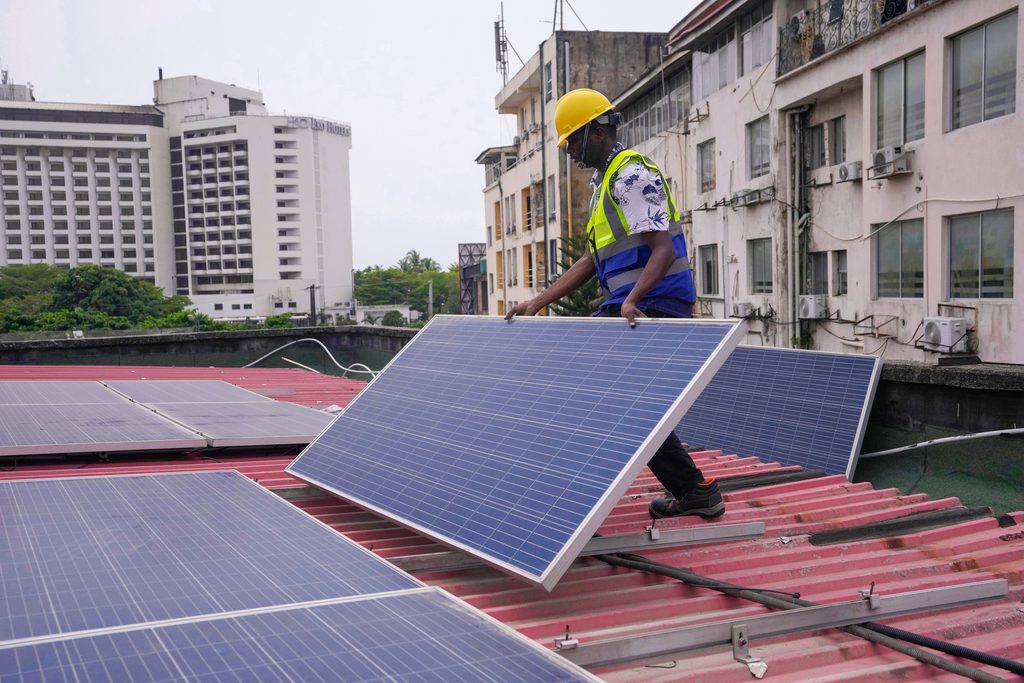
Nigeria’s persistent power crisis is fuelling a growing market for decentralised solar energy, as millions of businesses remain dependent on costly diesel and petrol generators amid an unreliable national grid that disrupts operations and inflates costs.
Solar developer PowerGen is betting that solar and mini-grids can deliver more dependable electricity at scale. Connor Shine, Director at Delphos, which financed the deal, discussed the plan with Business Africa, addressing whether commercial solar can now compete with generators, how the transaction manages currency risk, and whether the model could be replicated across other African markets.
Currency volatility remains one of the biggest obstacles to clean-energy investment on the continent. For companies building solar infrastructure, a weakening local currency raises the cost of imported equipment and complicates the repayment of dollar-denominated financing. Shine explained how Delphos structured its financing in the PowerGen deal to manage that exposure, raising the question of whether similar models could speed up decentralised energy investment elsewhere in Africa. Kenya, Ghana and the Democratic Republic of Congo, all seeking to widen access to reliable electricity, are seen as potential markets for distributed energy solutions.
Togo, Russia step up cooperation
After 65 years of diplomatic relations, Togo and Russia are deepening economic cooperation. The two countries recently held their first joint intergovernmental commission at the Palais des Congrès in Lomé. Trade between them remains modest, but both sides are exploring ways to expand investment and economic ties. The key question is whether closer political relations can translate into significant commercial opportunities for Togo and West Africa.
Africa’s digital gap narrows
Africa’s digital transformation is accelerating. According to the GSMA, 83 percent of connected Africans now go online every day. The continent’s mobile coverage gap has also fallen from 50 percent in 2016 to under 15 percent today, driven by sustained investment in telecommunications. As connectivity grows, the next challenge is converting wider digital access into broader economic opportunity.